

Testing under extreme conditions
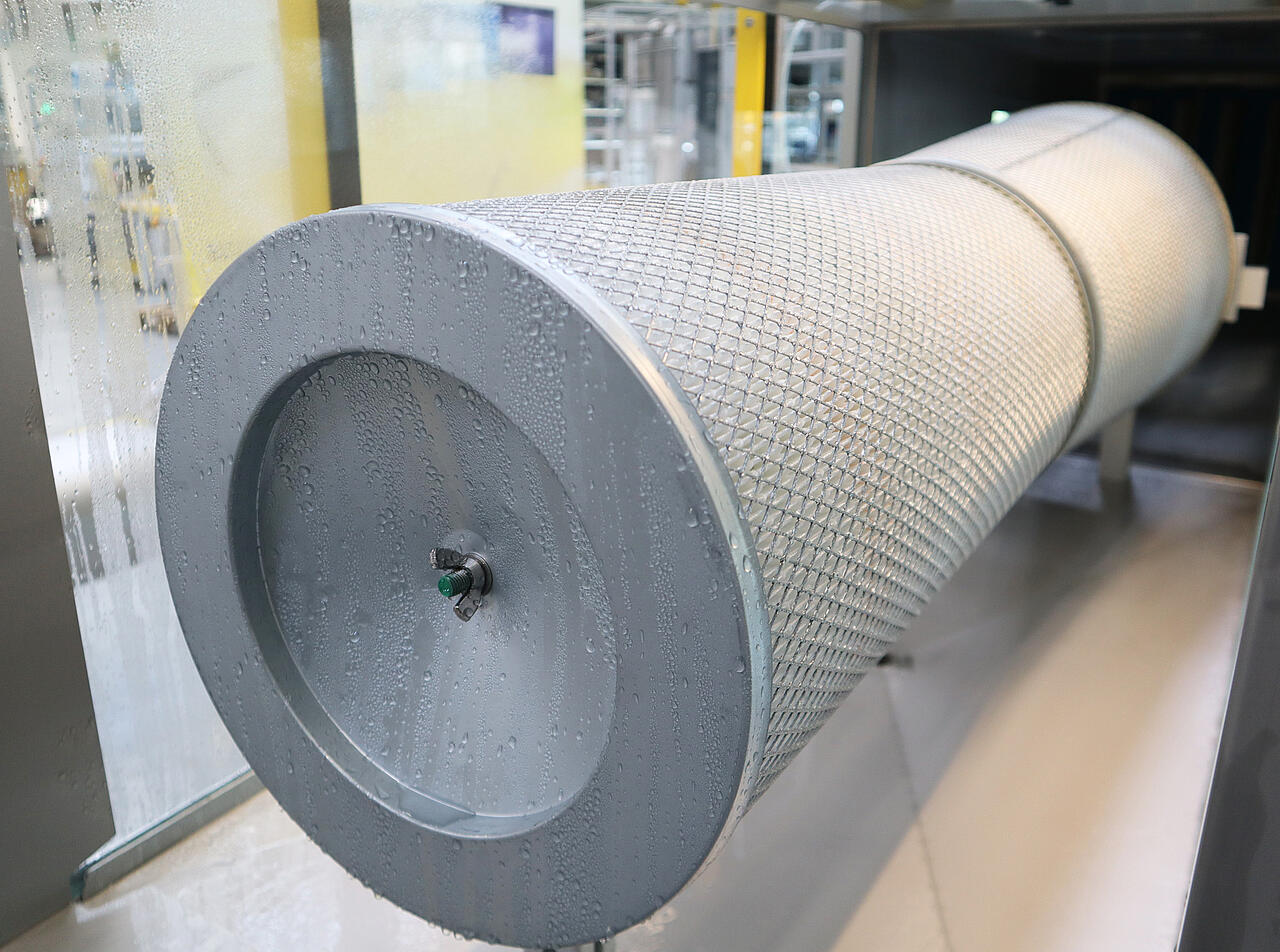
A gas turbine in operation is subjected to extreme conditions: water, salt, and, at times, high humidity take their toll on it every second. Filters are designed to minimize these effects and prevent damage. Flawless filter quality determines the service life of a turbomachine, especially in coastal, offshore, or desert regions. That is why they must be tested under precisely these difficult but realistic test conditions. To this end, we have developed the GTS 114 gas turbine filter test system.With it, filter manufacturers are able to test turbomachinery and gas turbine filters for
- salt
- water
- dust
in accordance with ISO 29461-1, -2, -3, and -4 – as proof of quality and to optimize your filters.
Which part of the test system is required for which section of the standard?
Are all or only certain parts of ISO 29461 relevant to your application? We have a solution for that. The GTS 114 test system is available in It is modularly expandable and available in various extension levels.
Select an option here to learn more about the standard sections and how they are implemented in the respective extension levels:
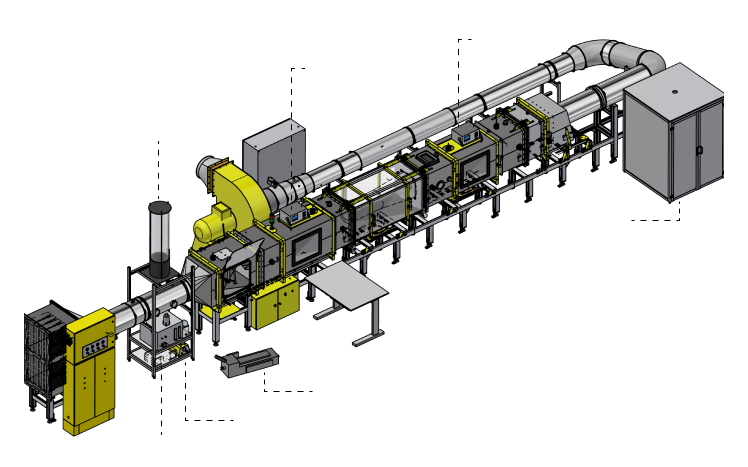
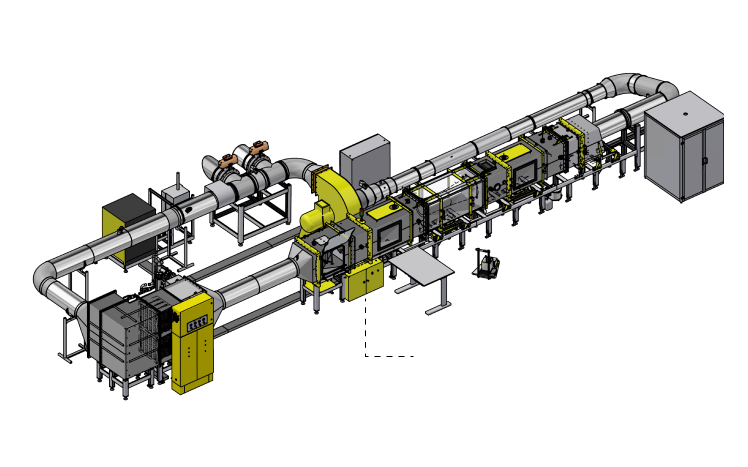
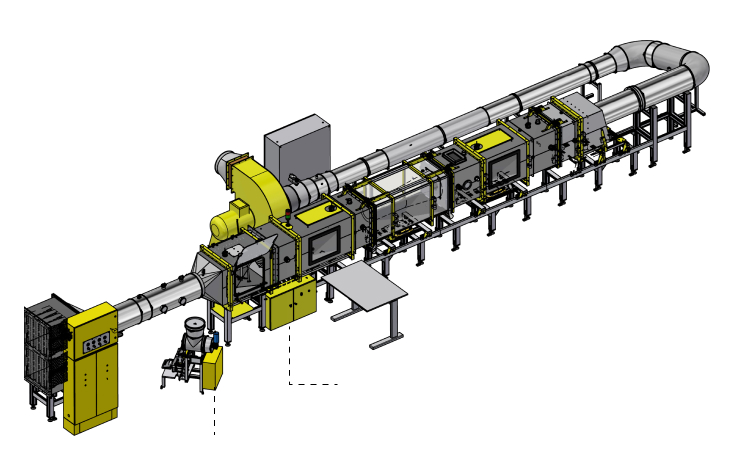
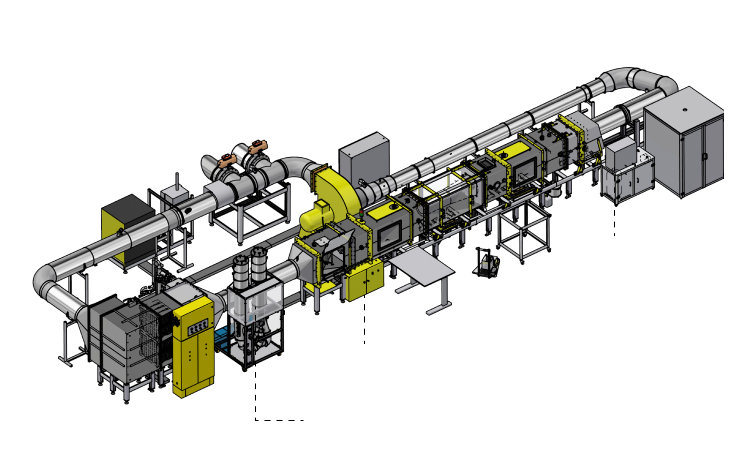
What exactly can you expect from our sophisticated GTS technology?
To ensure greatest possible realism, ISO 29416-4 was adopted in 2025. The innovative GTS 114 testing system is capable of meeting these requirements. The complexity of this test is evident, among other things, in the fact that the filters are exposed to water and salt for a full 120 hours without any further operator intervention, up to a pressure drop of 1000 Pa. In addition, the updated test system features air conditioning of the test air in recirculation mode, which is essential for this purpose.
Our solutions for filter manufacturers:
- Automated testing procedure thanks to the included GTS114Win software; no operator intervention required
- High maximum airflow (8,500 m³/h)
- Injection of water and moisture (analogous to spray water)
- Addition of salt aerosols
- Addition of dust aerosols
- Injection of steam to generate a relative humidity >95%
- Sophisticated test air treatment: capable of operating with fresh air, mixed air, and recirculated air to efficiently achieve a wide range of operating parameters
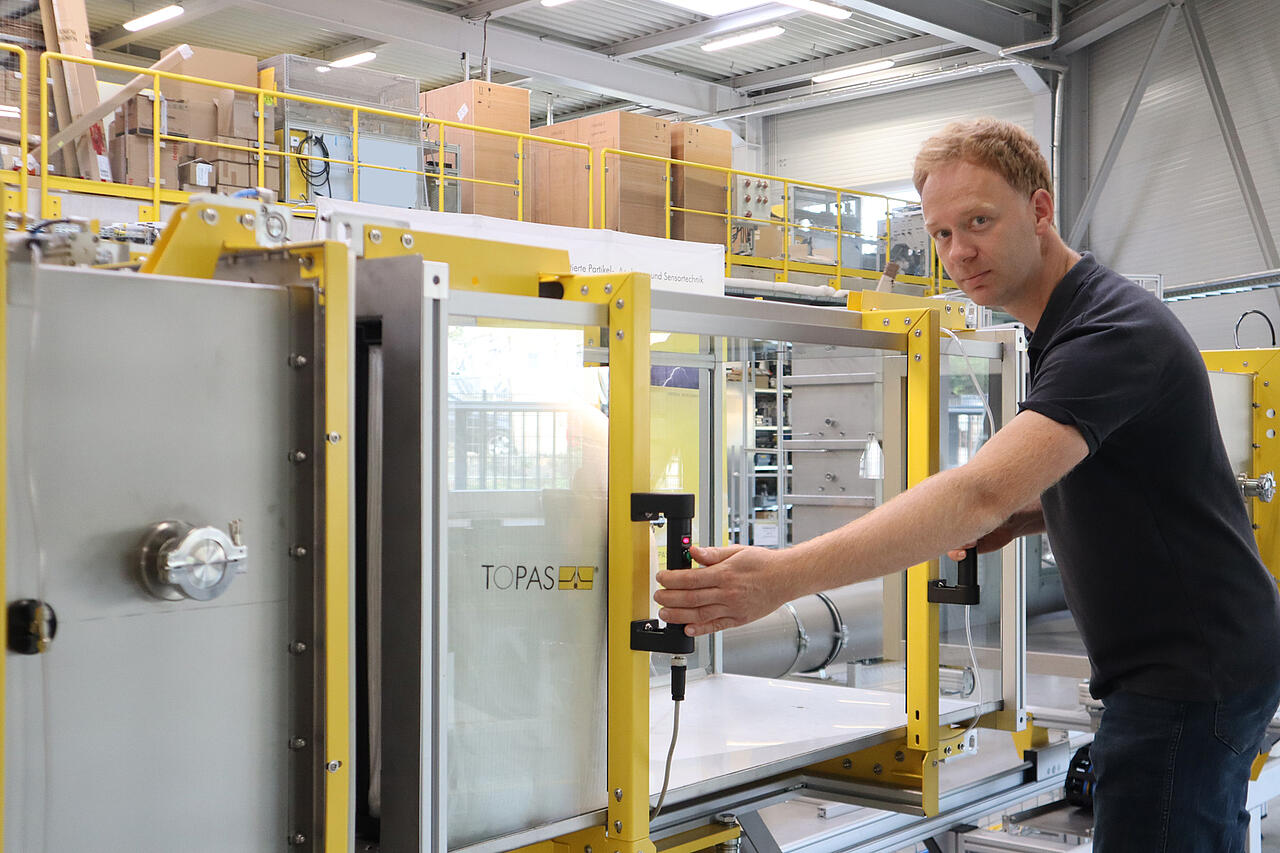
Topas developers explain their approach
With ALF 114, we met the high demand for air filter test benches compliant with ISO 16890 over 20 years ago, and to date we have installed this system more than 40 times for customers around the world. Now we have taken on the challenges of ISO 29461 and once again implemented them in an innovative test system. We see real potential for a sustainable future and room for development in the gas turbine market, which is why we have invested heavily in research into test conditions such as temperature and humidity. With GTS 114, we have achieved a technical masterpiece that, for the first time, commercially tests filters in accordance with ISO 29461-4. The four-member Topas team of development engineers not only designed the system in accordance with the standard and implemented its specifications but also adapted and optimized various components to meet our customers’ needs and ensure a user-friendly testing process.
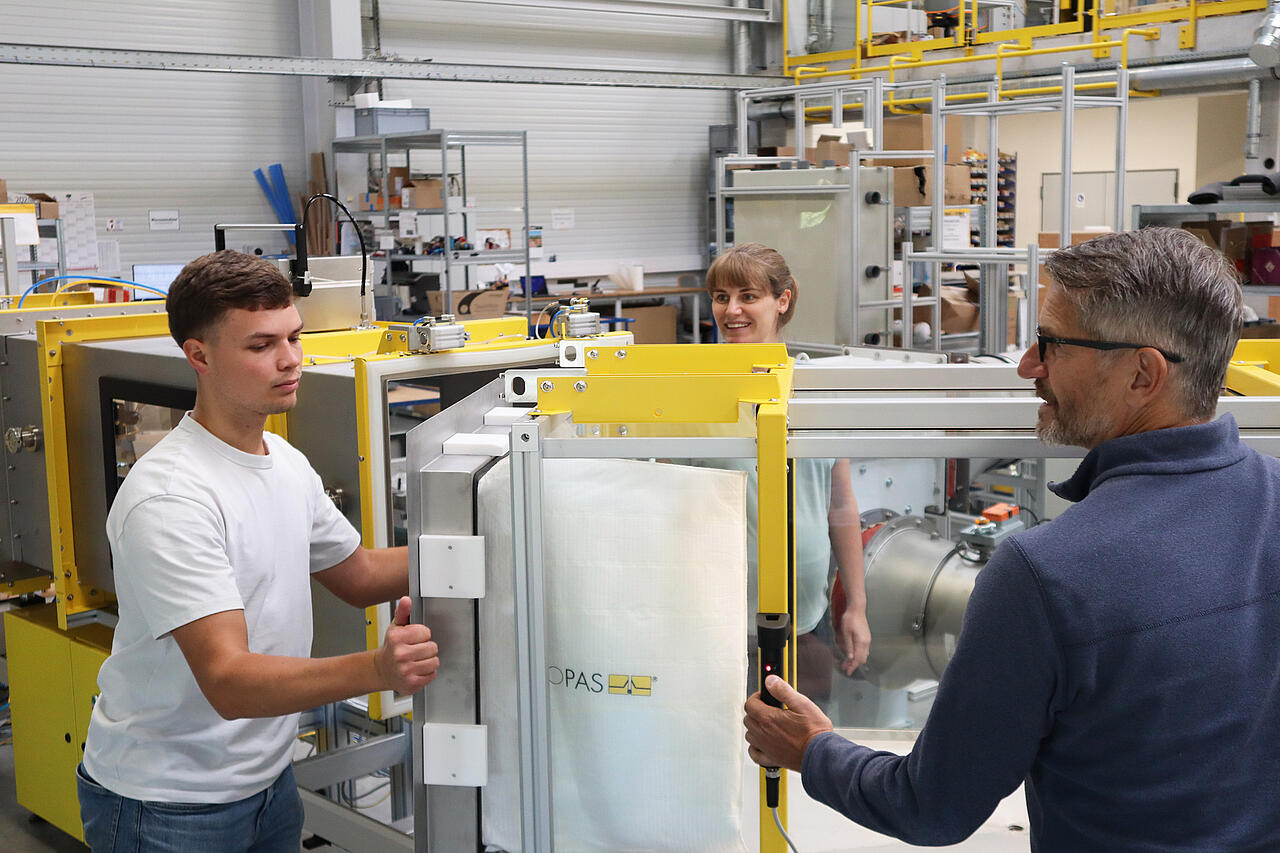
Why should manufacturers of filters for rotary machines such as gas turbine invest in the GTS 114?
Gas turbines are high-cost assets, and their failure results in significant follow-on costs. It is therefore important to use high-quality filters to protect them—filters that allow as little salt, water, or dust to pass through as possible. Filter manufacturers must therefore be able to ensure that their filters meet these requirements. They use the test results as a qualification check, to create their filter specifications, or for further development of their products. For example, tracer imaging makes it possible to track the behavior of water within the filter—valuable information for filter developers.
With GTS 114, our customers can obtain fully automated test sequences over periods of up to 120 hours—a true innovation in filter testing. In addition, GTS 114 is flexibly expandable, thereby facilitating predictable investments: the modular test stand concept offers various expansion stages to cover individual standard components.
What were the biggest challenges in this project?
Without a doubt, the salt and water loading.2 kg of salt absorbs 6 kg of water. Given the requirement for a relative humidity of >95%, this had to be factored into the calculations and regulated. The result is a supplementary climate control system that keeps the temperature in the test chamber consistently 0.5 °C cooler than the outside air in the laboratory. Another particularly tricky aspect was the adaptation of the ATM 240G salt generator, which is an essential part of the test according to ISO 29461-4. As a measuring device for aerosol concentration in the test channel, extensive adaptions of the flame photometer was also necessary. So there were many side issues that contributed to the overall result.
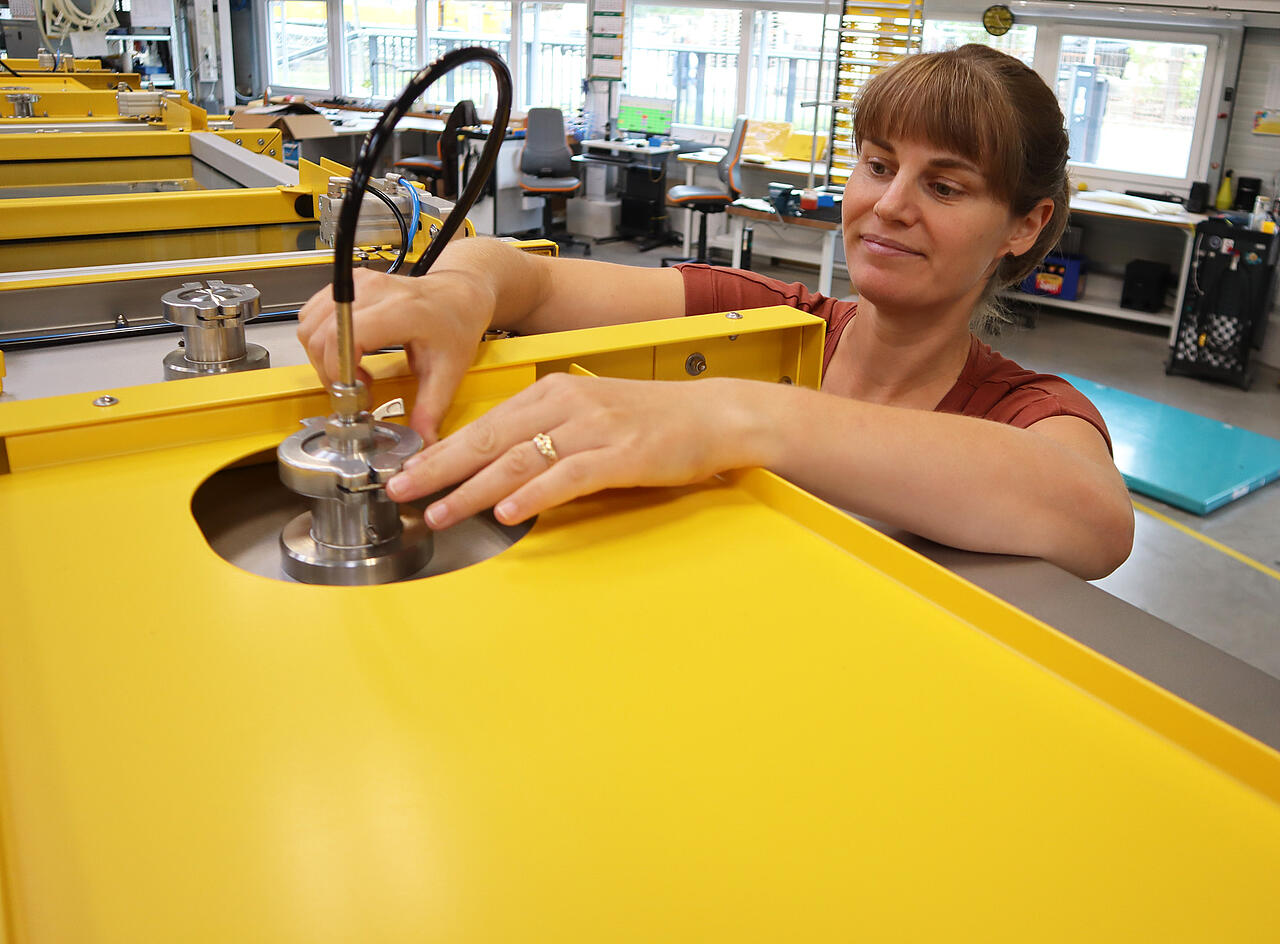
What prior knowledge is required to develop a test system capable of combining different material systems such as water, dust, and salt?
Many years of diverse experience in developing various test systems and production equipment is a major advantage of our development team. Of course, expertise in aerosol and particle technologies is essential, but knowledge of thermodynamic processes and flow visualization was also necessary to build this test bench. Perseverance over many months or even years until the final completion of such a complex test system is also indispensable.
| Background | The average salt content in seawater on stormy days is about 1 mg of salt per kg of air. The hourly salt load that strikes the engines of offshore facilities is therefore about 360 g/h. An efficient filtration system can significantly reduce this. |
| Consequences | Salt particles from seawater cause rapid pressure loss due to clogged filter pores or can even lead to salt penetration into the turbine. Even the smallest amounts that filters fail to capture can, when accumulated over the course of a year, cause significant damage to gas turbines. |
| Video | Technical implemention of the required salt feed |
| Background | Without a filtration system, up to 2,000 l/h of water can strike the gas turbine during stormy weather—as much as a medium-sized fire truck carries. |
| Consequences | Foaming spray strikes the gas turbine of an offshore facility and can lead to filter failure or hot-gas corrosion of the turbine. The salt content is particularly problematic here, as scaling and corrosion caused by it can lead to anything from a drop in performance to a complete system failure. |
| Video | Water injection process in the GTS 114 |
| Background | Wind blowing directly into your face at hurricane force — that is, at a speed of about 145 km/h — generates a pressure of approximately 1,000 pascals on the body. This is the maximum pressure drop we are allowed to generate in the 120-hour test. |
| Consequences | Fine particulate matter, found in desert regions for example, can corrode the metal alloys of turbines, clog cooling air vents, or wear down the high-precision blades in a manner similar to sandblasting. |
| Video | Simulation of a possible scenario in desert regions in the test channel using the SAG 420 dust generator and a water injection. |
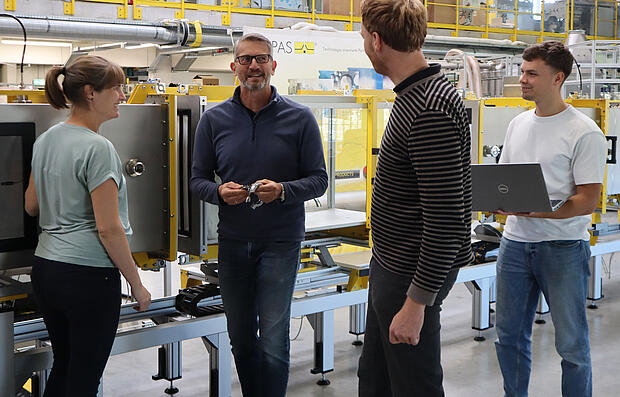
Many years of experience gained from hundreds of projects worldwide
Given the high standards set by ISO 29461, there is no doubt that a technology like that of GTS 114 must be backed by highly precise engineering and many years of experience gained from hundreds of test system projects. Countless installations, a wide variety of applications, and diverse on-site conditions at our customers’ locations worldwide form the foundation upon which this test bench was developed.
From many discussions with filter developers, we know that it is essential for your customers to trust that the filter will deliver the promised performance and service life. Only through qualified filter testing in accordance with ISO 29461 can you confirm that the filter delivers what it promises: to clean the intake air and to protect gas turbines from corrosion and rust.
GTS 114
Test System GTS 114 for testing air intake filter systems for rotary machinery (ISO 29461)

ALF 114
ALF 114 filter test system for general air filters according to ISO 16890, EN 779, ASHRAE 52.2
